
Ch12 双宿主 Skills 与 Runtime 交付
AlembicPlugin 不只暴露 MCP 工具,还要把项目知识和固定版本 runtime 交付给 Codex 与 Claude Code。Project Skill 源、宿主投影、marketplace shell、公开 alembic-runtime 包和本地 runtime cache 看起来都像“复制文件”,但每一种有不同的事实源、授权和版本边界。
本章讲交付层:项目 Skill 从哪里生成,怎样由 HostAdapter 选择 .agents/skills 或 .claude/skills,receipt 为什么必要,轻量 shell 如何下载并校验公开 runtime 包。
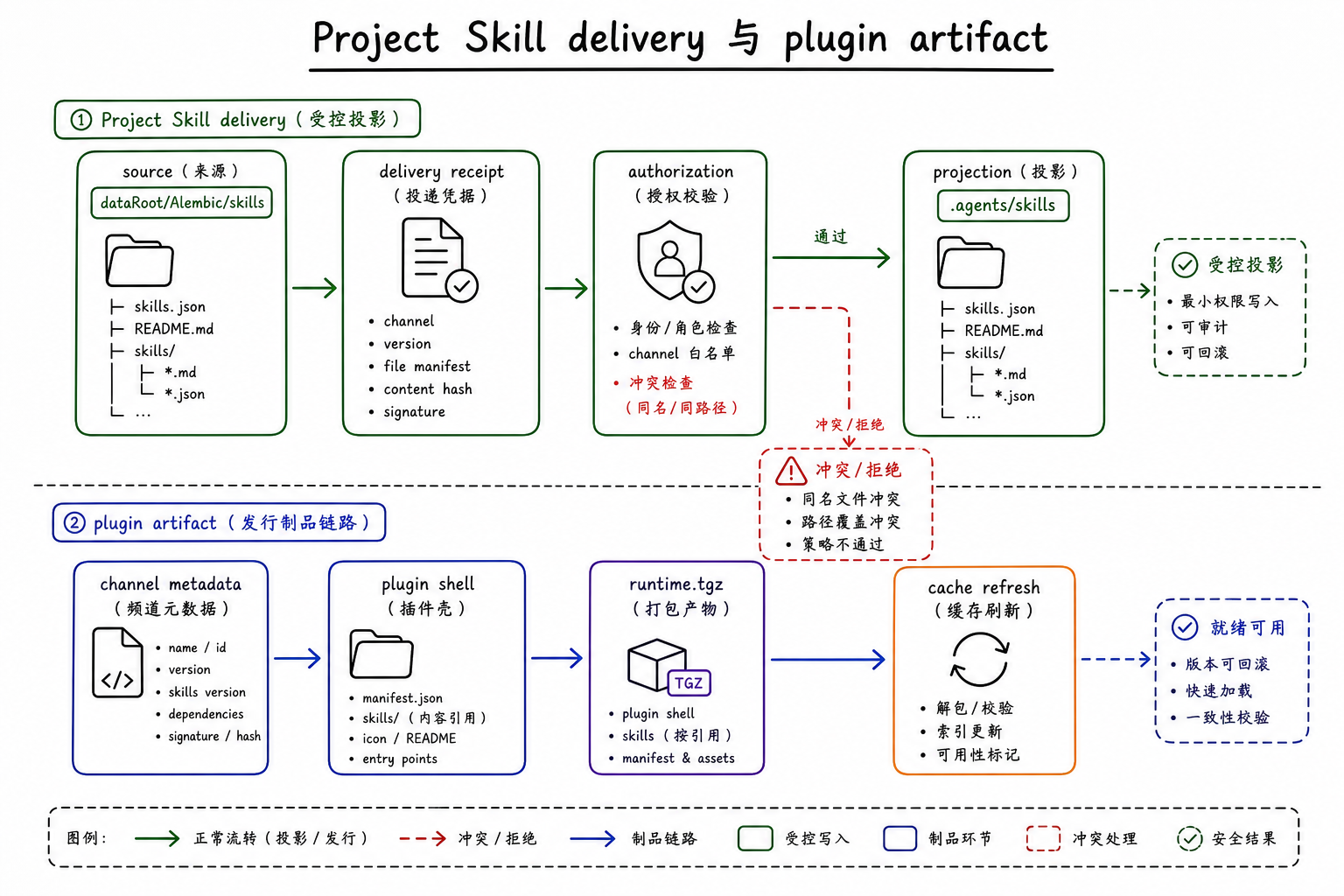
源码锚点:AlembicPlugin/lib/service/skills/ProjectSkillDelivery.ts、AlembicPlugin/lib/host-runtime/host-adapter/HostAdapter.ts、AlembicPlugin/plugins/alembic-codex/bin/alembic-start.mjs、AlembicPlugin/plugins/alembic-claude-code/.claude-plugin/plugin.json、AlembicPlugin/packages/alembic-runtime/package.json。
本章回答
- Project Skill 源和两个宿主 runtime 投影有什么区别。
- 为什么导出 Skill 需要授权和 receipt。
- Plugin shell、公开 runtime package、cache refresh 各自解决什么问题。
- 为什么不能把 marketplace shell、runtime cache 或 plugin cache 当源码改。
Project Skill 的源在 dataRoot
Alembic 的项目 Skill 源应该保存在 dataRoot/Alembic/skills/{skill-name}/SKILL.md。这是知识层的一部分,属于当前项目 scope。Codex 可见的 .agents/skills/{skill-name}/SKILL.md 与 Claude Code 可见的 .claude/skills/{skill-name}/SKILL.md 都是投影,不是默认事实源。
这一区分保护两件事:
- Alembic 可以在 Ghost dataRoot 中维护项目知识,而不直接写用户项目。
- 宿主 runtime 只在用户授权后看到项目 Skill。
如果把任一宿主技能目录当成唯一源,就会绕过 Alembic 的 receipt、authorization、conflict 和 refresh 机制。
HostAdapter 统一 project root trust、manifest layout、init marker、saved root 与 Skill root;CodexHostAdapter 选择 .agents/skills,ClaudeCodeHostAdapter 选择 .claude/skills。双宿主差异应停留在 adapter,不应复制 Skill 业务逻辑。
Delivery receipt 是交付证据
ProjectSkillDelivery.ts 会构建 ProjectSkillDeliveryReceipt。receipt 记录 projectRoot、projectScopeId、codexSkillRoot、skillName、sourcePath、contentHash、asset、evidenceRefs、authorization、runtimeExport、managedMarker 和 shoutSummary。
这些字段不是繁文缛节。历史字段名可能仍带 codex,但目标 root 由当前 host adapter 决定。它们回答了交付时最重要的问题:
- 这个 Skill 属于哪个项目 scope。
- 源文件在哪里。
- 内容 hash 是什么。
- 是否需要授权。
- runtime export 状态是什么。
- 目标宿主 Skill 目录里是否已有冲突。
- Alembic 是否管理这个投影。
没有 receipt,后续 refresh、delete、export、冲突处理都会变成猜测。
当前 delivery 代码位于 AlembicPlugin/lib/service/skills,不再放在早期 runtime 目录。这符合新的分层:host-runtime 处理 MCP/status/tool route,service/skills 处理 Project Skill 源、receipt、export 和冲突状态,脚本层再把插件级 runtime artifact 打包出去。把这三层混成一个 runtime 目录,会让读者误以为 Skill 交付只是 MCP handler 的副作用。
导出需要项目级授权
Project Skill export 默认是 symlink-first,但只有在授权后才会写入宿主 runtime。未授权时,receipt 可以存在,source 可以存在,但 runtimeExportStatus 会 blocked/pending。
这与 Alembic 的 Ghost 理念一致:生成项目知识和让宿主 Agent 自动消费项目知识,是两个不同动作。前者可以在 Alembic dataRoot 中完成,后者需要项目级授权。
冲突处理不能靠覆盖
导出时会检查 target dir、target SKILL.md、.alembic-managed.json、generation hash、generatedSkillId 和 source path。如果已有目标不是 Alembic 管理,或 hash/id 不匹配,就应返回 conflictStatus,而不是直接覆盖。
这种保守策略很重要,因为 .agents/skills 也可能包含用户手写 Skill 或其他工具生成的 Skill。Alembic 只能管理自己有 receipt 和 marker 的投影。
Built-in skills 与 Project Skills
Plugin 自带 alembic、alembic-create、alembic-guard、alembic-recipes、alembic-structure 等 built-in skills。这些 skills 是插件能力说明,不属于某个用户项目。
Project Skills 则来自当前项目知识层,可以由 Alembic refresh/upsert/create/update 管理。alembic_project_skill 通过 host adapter 查看 runtime projection,再看 dataRoot source,最后使用 built-in plugin skill。
这个优先级让项目本地知识可以覆盖通用指导,同时保留内置能力作为 fallback。
轻量 shell 与公开 runtime package
Codex shell 使用 .codex-plugin/plugin.json 与 .mcp.json,Claude Code shell 把 MCP 声明放在 .claude-plugin/plugin.json;二者最终都执行各自 marketplace 目录里的 alembic-start 启动器。shell 不携带另一套业务 runtime,而是固定下载、校验并启动同一版本的公开 alembic-runtime 包。
Plugin 根包 alembic-codex-plugin-runtime 仍是 private 开发仓,禁止 root npm publish;真正的 registry 交付物是 AlembicPlugin/packages/alembic-runtime/package.json 定义的公开 alembic-runtime@0.3.0,bin 为 alembic-codex-mcp,依赖同版本 registry @alembic/core。这把源码开发依赖与用户安装依赖重新收回包边界。
首次启动时,shell 从显式环境、宿主 plugin data、plugin 内 .runtime 或用户 cache 选择存储位置,并用安装锁和 stale-lock 清理保护并发。离线且精确版本不在 cache 时,它返回可恢复错误,不会静默换成其他版本。
Cache refresh 是本地安装维护动作
开发时 dev:codex-plugin:reload、dev:codex-plugin:sync、dev:codex-plugin:verify 会刷新和验证本地 Codex plugin cache。cache 是运行副本,不是 source repo。改源码后需要 build/reload/probe,让安装的 shell/runtime 指向经过验证的新版本。
不要直接在 ~/.codex/plugins/cache/... 里改源码。那会让本地运行暂时变化,却失去仓库 commit、build、release 和 source metadata 证据。
本章小结
AlembicPlugin 的交付层有两类资源:项目级 Project Skills 和插件级 shell/runtime。Project Skills 从 dataRoot 源生成,经 receipt、authorization、conflict 检查后投影到当前宿主 Skill root;Codex/Claude Code 轻壳则固定获取同一个公开 alembic-runtime,并用 cache、锁与版本校验保证可恢复启动。
理解这层之后,Plugin 的职责就完整了:它既提供 MCP 工具,也提供可持续的宿主知识交付路径,但仍不越界成为主 daemon、Dashboard 或 Core。