
Ch04 Core Contract Spine
@alembic/core 是 Alembic 多运行时系统的 contract spine。它不是“公共工具包”的松散集合,也不是把主应用拆薄后的残留代码;它定义了外层仓库共同依赖的确定性语义:项目如何定位,知识如何建模,搜索如何排名,Guard 如何执行,host-agent workflow 如何交换任务,daemon/job/runtime 状态如何被描述。
本章的阅读目标是建立 Core 的骨架感。后面讲 workspace、search、Guard、Plugin、Agent、Dashboard 时,都会回到这里判断某个能力究竟是“内核契约”还是“外层适配”。
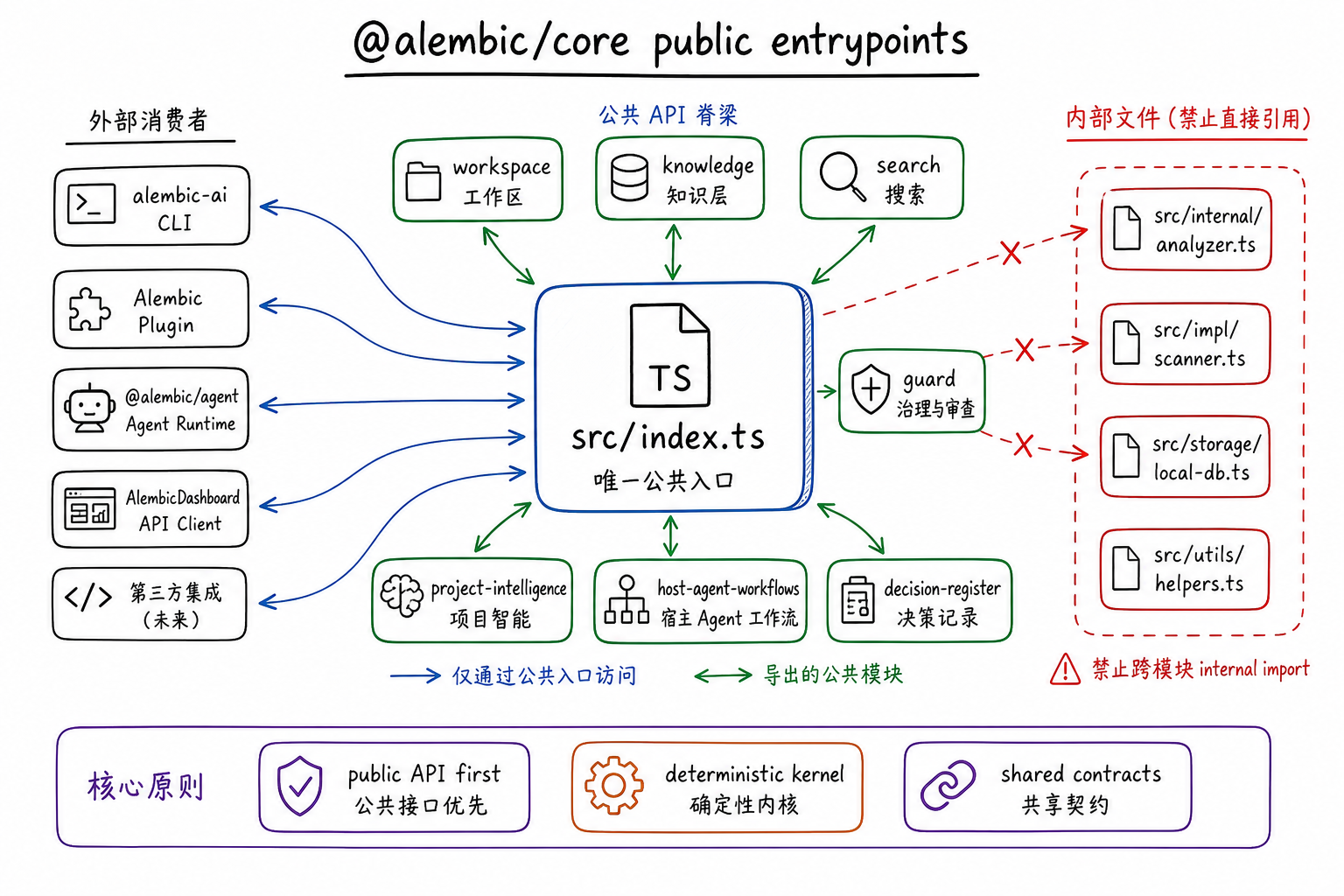
本章回答
- Core 为什么是 contract spine,而不是普通 shared utils。
src/index.ts和子路径 exports 分别承担什么边界。- Core 的 domain、repository、service、infrastructure 如何分工。
- 外层仓库为什么必须通过 package entrypoint 消费 Core。
包出口就是架构边界
Core 的 package.json 当前暴露 66 个子路径:根入口、./workspace、./knowledge、./search、./guard、./project-context、./project-context-capabilities、./recipe-context-capabilities、./host-agent-workflows、./plans、./daemon、./database、./repositories、./config、./io、./events、./dimensions、./evolution、./sustain、./workflows/*、./core/analysis、./core/ast、./core/discovery 等。这个设计不是为了让所有内部文件都可随意 import,而是为了把稳定 contract 命名出来。
根入口 src/index.ts 也刻意收敛。代码里明确说明根入口只暴露外层收敛需要的稳定契约,避免内部重复类型通过 export * 撞到一起。也就是说,Core 的 public API 不是目录镜像,而是一组经过挑选的 contract surface。
读者应该把 Core exports 看成一张地图:
workspace负责 projectRoot、dataRoot、Ghost、ProjectRegistry、folder names。knowledge负责 KnowledgeEntry、candidate、Recipe、字段规范、生命周期和写入/同步服务。search负责 BM25、hybrid retrieval、ranking、sourceRef adapter、search response meta。guard负责 GuardCheckEngine 和规则检查 contract。project-context负责 space、repo、map、module、module-layers、file-flow、file-symbols、source-slice、anchor-range 等结构请求。project-context-capabilities负责 ProjectContext 查询 facade、architecture intelligence 和 dynamic planning signals。recipe-context-capabilities负责 detail、list、search、prime、source-refs、relations 等 RecipeContext facade。core/analysis、core/ast、core/discovery负责 AST、grammar、符号、调用关系和项目发现基础能力。host-agent-workflows负责 cold-start/rescan/dimension completion/Project Skill delivery 等宿主 Agent 协议。daemon负责 JobStore、runtime control state、process events 和 resident service 状态形状。
这些入口共同形成 Core 的脊柱。外层仓库可以在脊柱上长出 CLI、daemon、MCP、Dashboard 或 AI runtime,但不应该绕过脊柱直接复制内部实现。
四层代码组织
Core 代码大致可以分成四层;当前 layer contract 还把更细的类别命名为 shared、types、domain、core、infrastructure、repository、service、workflows、daemon、root-facade。这些名字是边界检查的一部分,不只是目录描述。
第一层是 domain。这里定义知识条目、维度、生命周期、字段规范、演化策略等业务语义。domain 的价值是让“candidate 是否可消费”“Recipe 是否 readiness”“lifecycle 是否合法转移”这些问题有确定答案。
第二层是 repository。这里处理数据库、文件、sourceRef、sync、session、token、guard violation、evolution proposal 等持久化边界。repository 不负责 UI 呈现,也不负责 Codex 工具输出。
第三层是 service。这里把 domain 与 repository 组合成可调用能力,例如 KnowledgeService、KnowledgeSyncService、SearchEngine、GuardCheckEngine、VectorService、PanoramaService、RecipeExtractor、SourceRefReconciler。
第四层是 infrastructure/shared。这里提供数据库连接、Drizzle schema、logging、vector adapter、event bus、io/path guard、config loader、project registry、workspace resolver 等技术底座。
这种分层并不是为了教科书式整齐,而是为了让外层 runtime 可以选择合适的入口:CLI 可能调用 service,Plugin 可能通过 host-agent workflow contract 组织输出,Dashboard 只通过 HTTP API 读取结果,Agent 只消费它需要的工具和知识上下文。
当前 Core 事实源
几个 Core 文件是阅读全书时反复回到的事实源:
src/domain/dimension/DimensionRegistry.ts是维度定义单一来源;当前源码包含 26 个UnifiedDimension常量:13 个 universal、7 个 language、5 个 framework,以及显式启用时才进入编排的 cross-dimension synthesis。Bootstrap、Panorama、Rescan、Dashboard 都从这里消费元数据。src/domain/knowledge/values/Relations.ts定义关系桶,当前合法 bucket 包括inherits、implements、calls、depends_on、data_flow、conflicts、extends、related、alternative、prerequisite、deprecated_by、solves、enforces、references。src/core/enhancement/index.ts注册 enhancement packs;当前按 React、Next.js、Vue、Node server、Django、FastAPI、ML、LangChain、Spring、Android、Go web/gRPC、Rust web/Tokio 等方向懒加载。src/infrastructure/database/drizzle/schema.ts与 migrations 共同定义.asd/alembic.db的持久化边界。
这些文件适合作为章节事实锚点:维度、关系、增强包、数据库 schema 都不应从 Dashboard label 或旧 ledger 散文里反推。
Core 稳定的是确定性,不是宿主体验
Core 应该回答确定性问题:
- 这个项目的 Alembic 数据写在哪里。
- 这个知识条目是否是 candidate、accepted、degraded 或 deprecated。
- 搜索结果应该如何融合 lexical、BM25、vector 和上下文信号。
- Guard 如何从知识规则和代码输入生成检查结果。
- host-agent bootstrap 需要哪些维度、ProjectContext、unit progress 和 completion contract。
Core 不应该回答宿主体验问题:
- CLI 命令输出长什么样。
- Codex tool 的 visible text 怎样压缩。
- Dashboard 卡片如何布局。
- 某个 provider 的 API key 从哪里读。
- Codex marketplace artifact 如何打包。
外层运行时的差异越多,Core 越需要稳住这些确定性语义。反过来,如果 Core 开始拥有 Codex、Dashboard 或 provider 细节,它就失去了作为公共脊柱的价值。
Public API 守卫
Core 自己有 smoke:public-api、lint:public-api-boundary、lint:consumer-core-imports 和 release:check。外层仓库也通过 consumer import boundary 检查避免随意深 import。主 Alembic 的 scripts/core-source-command.mjs 会定位本地或 vendor Core source,然后运行 build 或 consumer import lint;Agent 和 Plugin 也有各自的 Core import boundary 脚本。
这说明 Core 的边界不是口头约定,而是发布和验证流程的一部分。若外层仓库需要一个新能力,正确动作通常不是 ../../AlembicCore/src/internal-file,而是把能力提升到合适的 Core package entrypoint,再让消费者通过 @alembic/core/{entry} 使用。
与外层仓库的关系
主 Alembic 消费 Core 的 workspace、daemon、search、guard、ProjectContext、host-agent workflow、database 和 config contract,把它们接进 CLI、daemon、HTTP API 和 Dashboard server。
AlembicPlugin 消费 Core 的 workspace、daemon contracts、ProjectContext、RecipeContext、host-agent workflows、io/path guard、ProjectSkillDeliveryReceipt、JobStore shape 和 public schemas,把它们投射成 MCP 工具。
AlembicAgent 消费 Core 的 logging、知识/工作流 contract 和 runtime 所需类型,但 AI provider、tool registry、policy、strategy 留在 Agent 仓库。
AlembicDashboard 不直接拥有 Core;它通过主 Alembic 的 /api/v1 API 间接消费 Core 产出的状态和对象。
读代码时的落点判断
看到 WorkspaceResolver、ProjectRegistry、PathGuard、KnowledgeEntry、SearchEngine、GuardCheckEngine、ProjectContext、RecipeContext、buildIDEAgentAnalysisPacket、JobStore 或 host-agent workflow contract,优先在 Core 找事实源。
看到 CLI command、daemon start/stop、HTTP route、Dashboard server、provider-backed job enqueue,优先在主 Alembic 找装配。
看到 MCP tool schema、tool visibility、clean output、Codex status/diagnostics、Project Skill export,优先在 AlembicPlugin 找适配。
这个判断比目录名字更可靠,因为 Alembic 正处在多仓库收敛过程中,同名概念可能在不同仓库有 adapter、projection 或兼容层。事实源以 contract owner 为准。
本章小结
@alembic/core 的价值在于稳定共享语义。它把项目定位、知识模型、检索、Guard、ProjectContext、RecipeContext、host-agent workflow 和 daemon state 这些确定性 contract 收敛成包入口,让主运行时、Plugin、Agent 和 Dashboard 能在同一套事实上协作。
后面两章会沿着这条脊柱下钻:先看项目模型、路径和存储,再看分析、检索与 Guard 内核。