
Ch08 Daemon、HTTP API 与 Job 事件
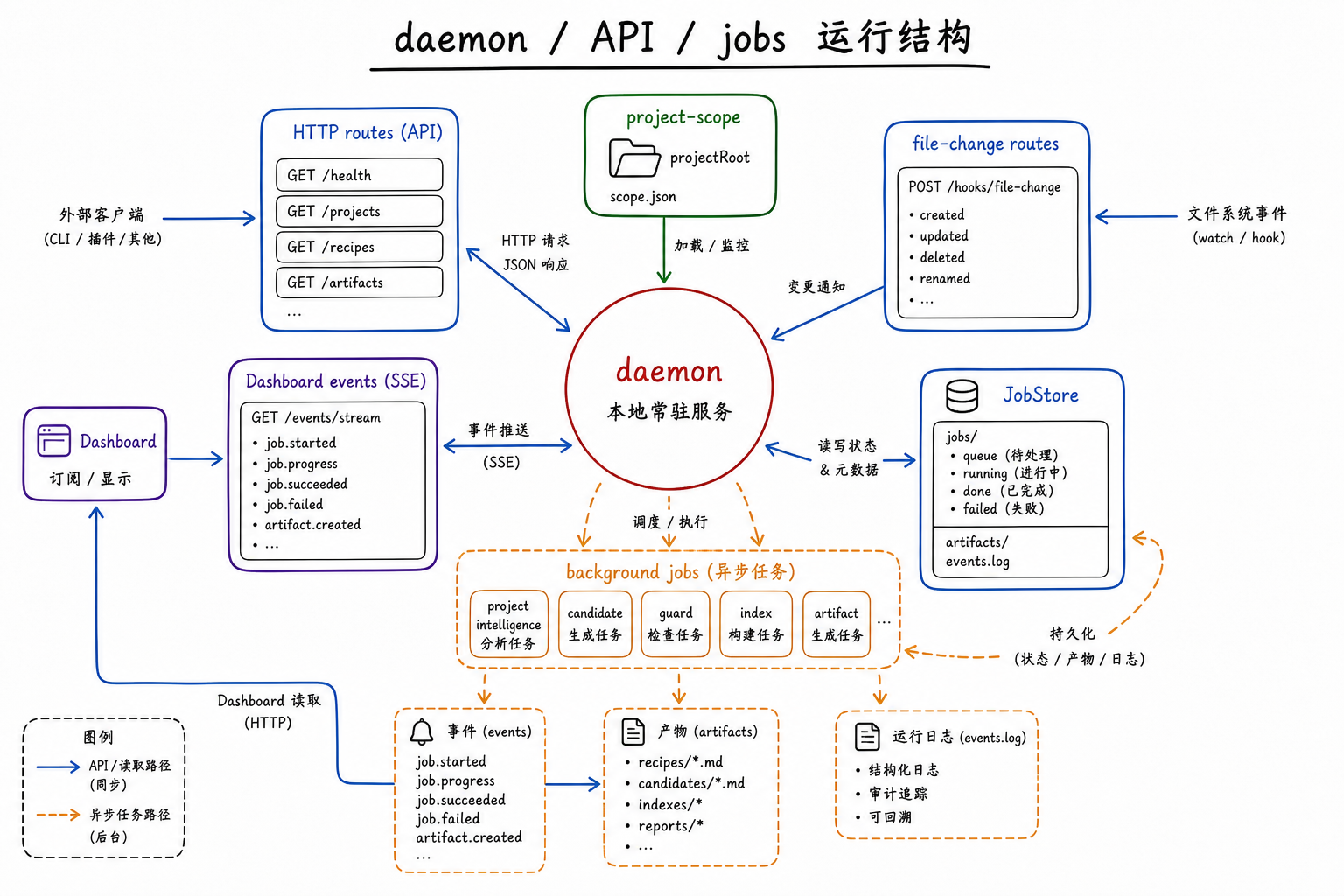
Alembic resident service 的外观是一个本地 Dashboard URL,内部则是一组 HTTP routes、daemon 状态、JobStore、process events、artifact reader、file-change dispatcher 和 runtime source-of-truth。它们共同解决一个问题:本地知识系统必须可观察、可恢复、可被多个入口安全消费。
本章关注主 Alembic 仓库的服务面。这里不是前端 UI,也不是 Codex MCP,而是它们背后的本地 API。
本章回答
- daemon 如何把一次性 CLI 变成持续服务。
/api/v1routes 覆盖哪些产品面。- JobStore、process events 和 display snapshot 为什么重要。
- file-change endpoint 如何把代码变化接回知识演化。
Daemon 是本地 resident boundary
daemon 的职责是守住当前项目的 resident boundary。它知道项目 dataRoot、runtimeDir、databasePath、API base URL、Dashboard URL、file monitor 状态、jobs capability、api-ai 配置、runtime source of truth。
主链从 Alembic/bin/daemon-server.ts 启动:先建立 AppRuntime 和 DI,随后挂载 HTTP server、文件变更采集、知识维护 sweep 与 Dashboard 静态资源,并做 readiness 检查。ready 后,动态端口、token、数据库路径、migration 版本、entrypoint 与 execPath 被写入 daemon state,供 ProjectRuntimeControl、Dashboard 和 Plugin resident client 复用。Dashboard 构建缺失时只降级静态 UI,API 仍可运行。
这些状态会出现在 alembic status、Plugin alembic_status、Dashboard handoff 和 ProjectRuntimeControl snapshot 中。它们是诊断证据,但也有明确限制:selected/active runtime state 是诊断和控制数据,不能随意覆盖当前 host project 的 identity。
HTTP routes 是 Dashboard 和工具的共同后端
主仓库 lib/http/routes 当前有 25 个 route families:ai、audit、candidates、commands、daemon、evolution、extract、file-changes、governance、guard、guardRules、health、jobs、knowledge、logs、modules、panorama、project-scope、projects、recipes、search、signals、skills、violations、wiki。
另外,Alembic/lib/generated/dashboard-api-types.ts 由 provider contract 生成,当前 provider contract table 有 31 条 route。Dashboard 侧提交 generated copy 和 sha256 pin,用来检查前后端 API 漂移。
生成表中的代表性路径包括 /api-spec、/health、/daemon/health、/projects、/projects/{projectId}/switch、/project-scope、/jobs、/jobs/bootstrap、/jobs/rescan、/jobs/{jobId}/events、/jobs/{jobId}/display-snapshot、/jobs/{jobId}/artifacts/{artifactId}、/guard、/rules、/violations、/knowledge、/search、/recipes、/modules/scan、/panorama、/panorama/health、/panorama/gaps、/wiki/generate、/governance、/evolution/proposals、/file-changes、/signals/trace、/audit、/logs。这里的 route contract 是 Dashboard 和其他消费者的 API 事实源。
这说明 Dashboard 不是直接读文件,也不是自己决定知识生命周期。它通过 API client 调 /api/v1。Codex Plugin 的 status/dashboard/job 能力也会读取这些 resident capability。CLI 的一部分命令同样可以走本地服务或共享底层 service。
API route 的价值是把“本地知识层”变成可交互系统,而不是把所有东西藏在命令行输出里。过期 route 名不应继续写进书里;例如 decision-register HTTP entry 已在 DRR-2 后退出当前 provider contract。
Jobs 让长任务可恢复
Bootstrap 和 rescan 不是毫秒级操作。主仓库用 JobStore、DaemonJobRunner、process event recorder 和 display snapshot store 管理它们。/api/v1/jobs 能列出 job,按 kind/status 过滤,读取单个 job,读取 process events,读取 display snapshot,读取 artifact。
Job API 的响应不只是 status。它会装饰 progress、summary、displaySnapshot、active task、percent、tool call count、session id 等信息。Dashboard 的 JobsView 和 BootstrapProgressView 依赖这些投影;Codex status 也能看到 jobs capability。
这让长任务具备三个性质:
- 可恢复:CLI 结束后 job 记录仍在。
- 可观察:process events 和 snapshots 能说明任务阶段。
- 可审阅:artifact 可以被读取,而不是只剩一行成功/失败。
终态分类也必须诚实。Alembic/lib/daemon/jobs/bootstrapStatusClassification.ts 对 completed_with_errors 做保守区分:能够证明至少有一项成功产出时,job 记为 completed(部分成功);零成功或缺少成功证据时仍记为 failed。部分成功不能被前端抹成全成功,也不应因为局部失败而否认已有产物。
Panorama 是真实 API,不是前端概念图
Alembic/lib/http/routes/panorama.ts 已挂载在 HttpServer,提供 overview、health 与 gaps 三个端点;Dashboard 的 AlembicDashboard/src/api/panorama.ts 和 PanoramaView.tsx 直接消费这三条 API。页面内部再组织 overview、dependencies、graph、gaps 四个标签,并使用 Promise.allSettled 允许部分面板成功。
因此 Panorama 的正确归属是:Core/主 runtime 计算项目结构与健康事实,HTTP 提供契约,Dashboard 负责投影和交互。前端不是 Panorama 分析器。
Process events 是运行证据
Job process events 支持 workflow、LLM input/reflection/output、tool、artifact、checkpoint、error、summary 等类型,并带有 display policy、retention policy、source class。这个设计让 Alembic 能区分开发者可见信息、机器内部信息、raw provider 信息、secret 或 hidden reasoning。
对书稿读者来说,重点是:Alembic 的运行证据不是日志碎片,而是有类型、有保留策略、有 artifact ref 的事件流。未来验收某个 bootstrap/rescan 结果时,应读这些 raw evidence,而不是只看 Dashboard 上的一句 summary。
File changes 触发演化入口
/api/v1/file-changes 接收 created、renamed、deleted、modified 等事件,来源可以是 daemon file monitor、host-edit、git-head、git-worktree 等。route 会校验输入、过滤非法事件,然后交给 FileChangeDispatcher。
响应体是 ReactiveEvolutionReport:fixed、deprecated、skipped、needsReview、suggestReview、details 等。也就是说文件变化不直接等于“自动修改 Recipe”。它先进入调度和报告,告诉系统哪些知识可能需要复核。
当前本地 daemon 也可能降级到 git-worktree fallback。降级不是失败,只要 status 能说明 activeEventSource、degradedReason 和 fallback reason,系统仍然可诊断。
ProjectScope API 让多仓库项目可见
project-scope routes 负责读取 scope、添加 folder、列出 folder、解析 folder。它让 resident service 明确当前 project scope 覆盖哪些源码仓库,以及当前 folder 是哪个。Codex status 中展示的 Alembic/AlembicCore/AlembicPlugin/AlembicDashboard/AlembicAgent folder 列表就来自这条能力。
ProjectScope API 是本地运行时对多仓库项目的投影。它不是 Git submodule 管理,也不是 workspace 总控文档;它只是告诉 Alembic 当前知识层覆盖哪些代码事实。
API 不应替代 Core contract
HTTP routes 是外层服务边界,Core contract 仍是确定性语义来源。例如 search route 调用 SearchEngine,Guard route 调用 GuardCheckEngine,knowledge route 使用 KnowledgeService,jobs route 使用 Core daemon JobStore shape。
如果一个改动只是调整 API response 或 Dashboard 需要的投影,主仓库是合理落点。如果一个改动改变 KnowledgeEntry 生命周期、search ranking、Guard engine 或 workspace path 语义,就应该回到 Core。
本章小结
主 Alembic daemon 把本地知识系统变成持续服务。25 个 route families、31 条 provider contract route 给 Dashboard、CLI 和 Plugin 提供统一后端;JobStore 和 process events 让长任务可恢复、可观察、可审阅;Panorama、file-change 和 ProjectScope 则把项目结构、变化与多仓库范围变成可诊断事实。
下一章会聚焦两个最重要的长任务:cold start 和 rescan。